You use Chargemap to charge your electric vehicle, but you charge at charging points belonging to different networks, with electricity suppliers that also change from one charging point to the next? That's normal: several players are involved between the electricity that powers the charging point and the session you start from your app or your card. Here's who does what, and where Chargemap fits into this landscape.

Key Takeaways
- Charging an electric vehicle involves 4 main players, from electricity generation right through to the charging solution you use.
- The CPO (Charge Point Operator) installs, runs and maintains charging points.
- The eMSP (e-Mobility Service Provider) gives you access to these charging points and manages your billing: that's the role Chargemap plays.
- Chargemap doesn't install or technically supervise any charging points, and doesn't supply electricity.
Why doesn't the charging point show the same name as your charging solution?
On the charging point, you'll often see the name of a network you don't recognise, even though you're charging with Chargemap. There's nothing unusual about that: charging an electric vehicle relies on several distinct jobs. Generating the electricity, installing and running the charging point, connecting the networks to one another, and finally giving you simple access to all of this from your app or your card.
The result: these jobs are almost always handled by different players. That's why the name displayed on the charging point isn't the same as your charging solution.
The 4 players that make your charging possible
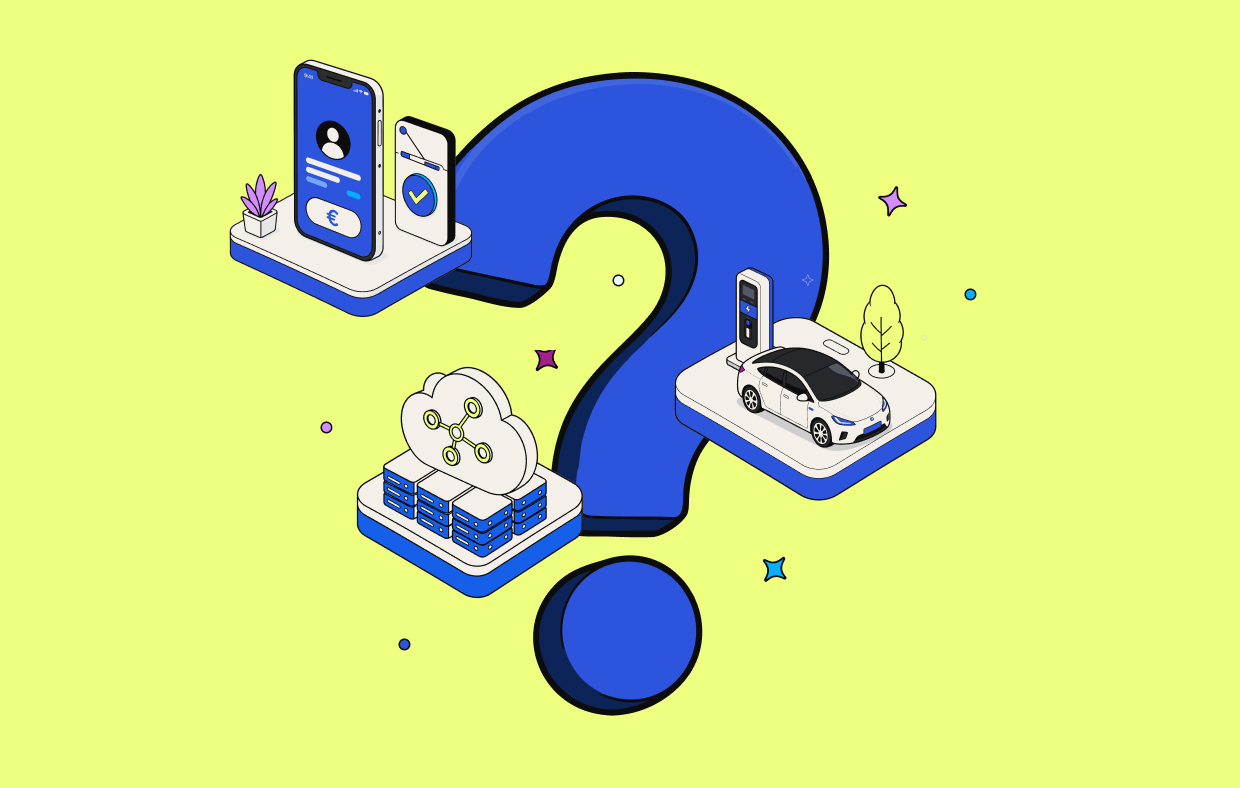
In practice, a charging session involves 4 main groups of players, from electricity generation right through to charging your electric vehicle.
1. The energy supplier: the one who supplies the electricity
This is the starting point of the chain: the energy supplier generates and supplies the electricity that's then delivered to the charging point. In the UK, this includes names like EDF, Octopus Energy or British Gas. Unsurprisingly, these are often big energy names you'll already recognise from your own household electricity contract.
2. The CPO: the one who installs and runs the charging points
The CPO installs the charging point, connects it to the electricity grid, then handles its day-to-day technical operation: maintenance, monitoring, getting it back up and running after a fault. They're responsible for the charging point in front of you actually working. Players such as IONITY, Allego or Osprey play this role on the ground.
💡 Tip: the name shown on the charging point's screen is usually the CPO's, not your app's or card's. To dig into this further, here's how public charging points work.
3. Roaming platforms: the ones that connect networks to each other
Between the CPO and the eMSP, a roaming platform provides the technical connection between different networks. It's thanks to this that your card or app works on charging points that don't belong to the same network as yours.
4. The eMSP: the one who gives you everyday access
The eMSP is the last link in the chain, and the one you know best: they give you an app or a charging card, provide access to a wide range of charging points run by different CPOs, and centralise your billing in a single account.
That's the role Chargemap plays: with the Chargemap Pass, you get access to over {{charging-points}} charging points across Europe, on more than 2,000 compatible networks.
Player | Their role | Examples |
|---|---|---|
| Energy supplier | Supplies the electricity | EDF, Octopus Energy, British Gas |
| CPO | Installs, runs and maintains charging points | IONITY, Allego, Osprey |
| Roaming platform | Connects CPOs and eMSPs to one another | Gireve, Hubject |
| eMSP | Gives access to charging and manages billing | Chargemap |
And EV drivers, where do they fit into all this? You're the last link in the chain. This is where your entire charging experience plays out: access to the charging point, the information shown, the payment. And it's precisely the eMSP's job to make that as simple and intuitive as possible.
Chargemap, an eMSP: what we do, and what we don't do
The eMSP role is a precise one. We'd rather be transparent about exactly what it covers, rather than leave any doubt.
What Chargemap does
- Give you access to over {{charging-points}} charging points across Europe with a single account, whichever CPO operates the charging point;
- Centralise your billing, without you having to open an account with every network;
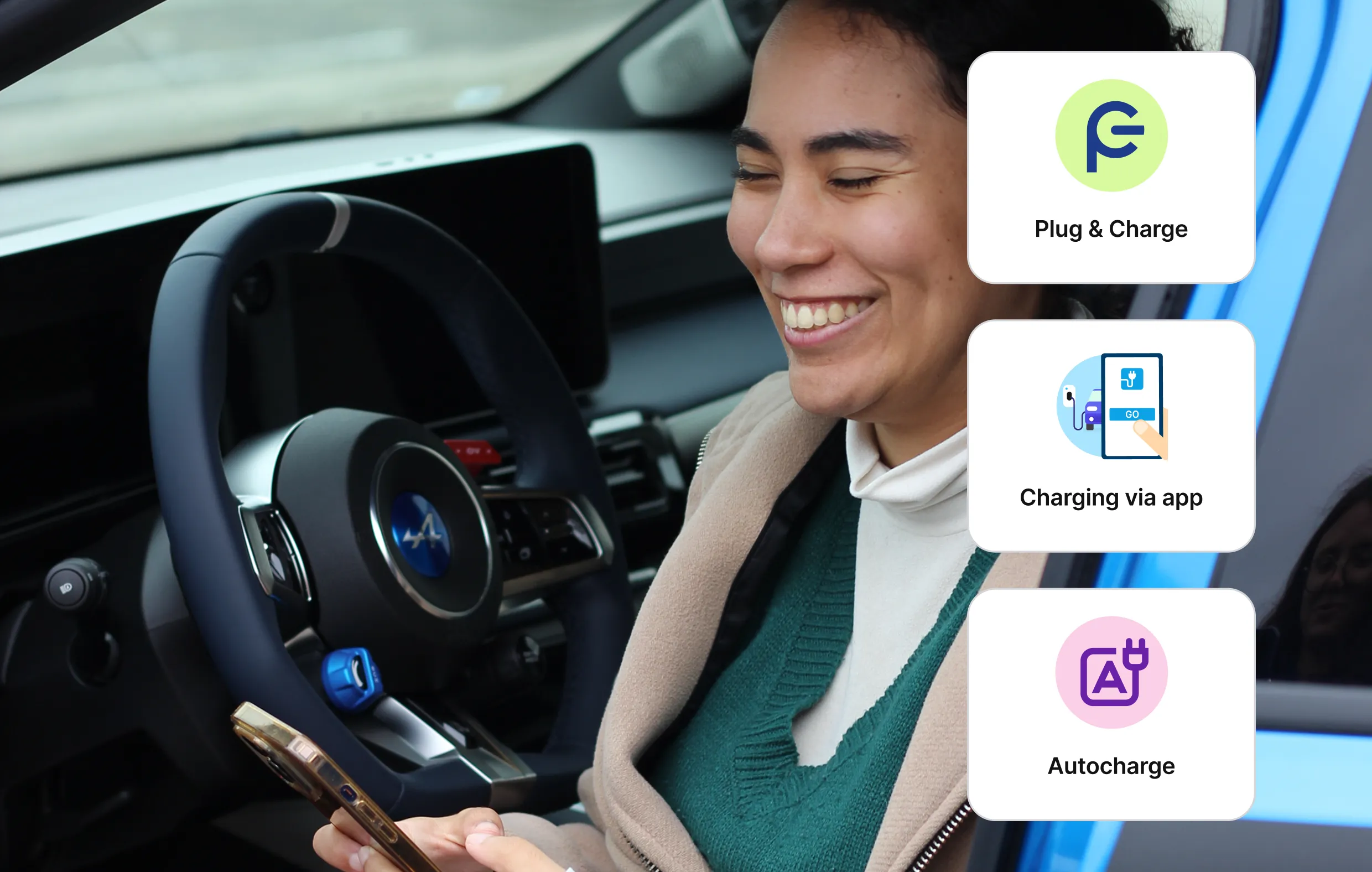
- Let you charge via card, mobile app, Autocharge or Plug & Charge;
- Give you visibility on availability and prices before you start a charging session.
🔎 Find out more: Charging with Chargemap: card, app, Autocharge, Plug & Charge?
What we don't do
- We don't install any charging points;
- We don't technically supervise charging points: that's the role of the CPO that runs them;
- We don't handle faults and we don't repair charging points either;
- We don't generate or sell the electricity running through the cable;
- We don't set the price per kWh shown on the charging point: that's still decided by the CPO.
Can one player take on several roles?
Yes, and it's actually quite common. Some major energy groups, such as TotalEnergies, are energy supplier, CPO and eMSP all at once: they generate the electricity, install their own charging points, and also offer their own app or charging card.
Chargemap made a different choice: staying focused on the eMSP role, without becoming a CPO or an energy supplier. This positioning lets us stay neutral on network choice, and focus entirely on your everyday charging experience: simple access, transparent pricing, and a single account to manage it all.



We answer your questions
What's the difference between a CPO and an eMSP?
The CPO (Charge Point Operator) installs and physically runs the charging point. The eMSP (e-Mobility Service Provider) gives you access to that charging point via an app or a card, and manages your billing. A driver almost always goes through an eMSP, even when charging at a point run by a completely different CPO.
Does Chargemap install charging points?
No. Chargemap is an eMSP: we give you access to a wide network of charging points installed and run by third-party CPOs, but we don't install, own or technically supervise any charging points ourselves.
Can the same player be a CPO and an eMSP at the same time?
Yes, some groups take on both roles, or even all three alongside energy supplier. That's the case for TotalEnergies, for example. Chargemap has made the opposite choice: staying purely an eMSP.
Who sets the price I pay at the charging point?
The price per kWh is generally set by the CPO that runs the charging point. The eMSP can then apply its own terms on top.