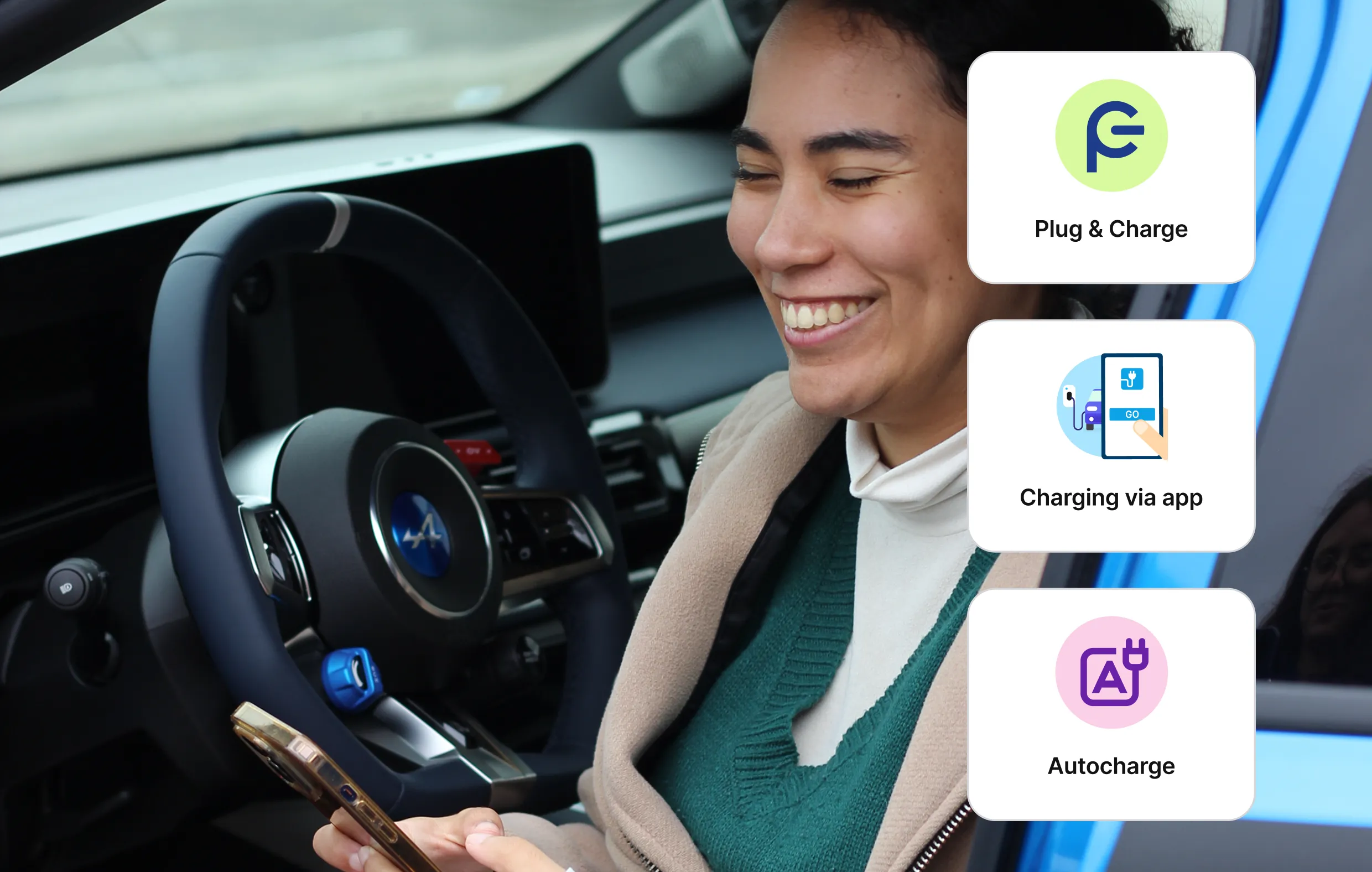
A single-network charging card, a multi-network charging card, paying by bank card directly at the charging point... There are so many ways to charge away from home these days that it's easy to lose track of what's what. There's no single best charging card for everyone, but a handful of well-chosen criteria are enough to find the one that suits your needs. Here are 7 questions to ask yourself to make the right choice, without getting lost in the sheer number of options on the market.

Key Takeaways
- An charging card is still essential today: 80% of charging stations still aren't equipped with a card reader, despite the AFIR directive coming into force.
- The right choice comes down to 3 main criteria: coverage of compatible networks, pricing transparency, and the quality of customer service.
- Billing varies from one card to another: monthly subscription, pay-per-charge, or a mix of both. The Chargemap Pass, for example, works with no subscription at all.
- Your everyday journeys matter more than European coverage: it's worth checking compatibility with the charging stations you use most before worrying about coverage abroad.
Is an RFID card for EV charging still really necessary today?
To put it in a nutshell: Yes. There are basically 3 good reasons why.
- 80% of charging stations are not equipped with a credit card reader but have an RFID card reader instead.
The AFIR (Alternative Fuels Infrastructure Regulation) directive, which came into force in April 2024, makes it compulsory to pay by bank card at electric car charging points (in addition to other methods of payment). This applies in particular to new infrastructure with a power rating of more than 50 kW. From 1 January 2027, the scheme will be extended to charging points over 50 kW installed before April 2024 on the European TEN-T road network or in secure parking areas. Charging points under 50 kW, which still make up 84% of public charging infrastructure in France, won't be covered by this requirement. - Charging stations equipped with a credit card reader are often overcrowded.
Most of them are rapid charging stations located on major motorways. However, there are not enough of them to cope with peak travelling times – especially in the summer months. An RFID charging card gives you a whole range of options when the roads are particularly busy. This means you will easily find somewhere you can take a break near your route so that you can charge at less congested charging points. - Monitoring your charging sessions and payments is child’s play with an RFID charging card.
It’s not easy to know exactly how much you are paying when you charge your EV at a charging point using a credit card. In the event of an error or malfunction when charging, it is also far more complicated to be reimbursed. Very few mobility service providers today are capable of ensuring a quality service on this point.
An RFID card for EV charging like Chargemap Pass, comes with a whole gamut of services to optimise the management of your charging sessions and your budget. What’s more, you benefit from dedicated technical assistance and customer service in the event of a problem linked with your RFID card for EV charging.
When you are away from home, an RFID card for EV charging remains absolutely essential. Not only do you benefit from a widespread coverage of charging stations, but more importantly, you can enjoy a better quality of service overall.
7 questions to ask to opt for the very best charging card for your electric car

1. How many compatible charging points are there?
For starters, kitting yourself out with a multi-network RFID charging card offering extensive coverage of charging points is the best way of avoiding stress when charging your EV. Start by checking out the compatible charging stations in your vicinity and then take a look at the charging points located along the routes you take on a regular basis. You can then zoom out to see all the charging options available for your next long journeys behind the wheel of your EV.
2. Does the RFID charging card cover networks in other European countries?
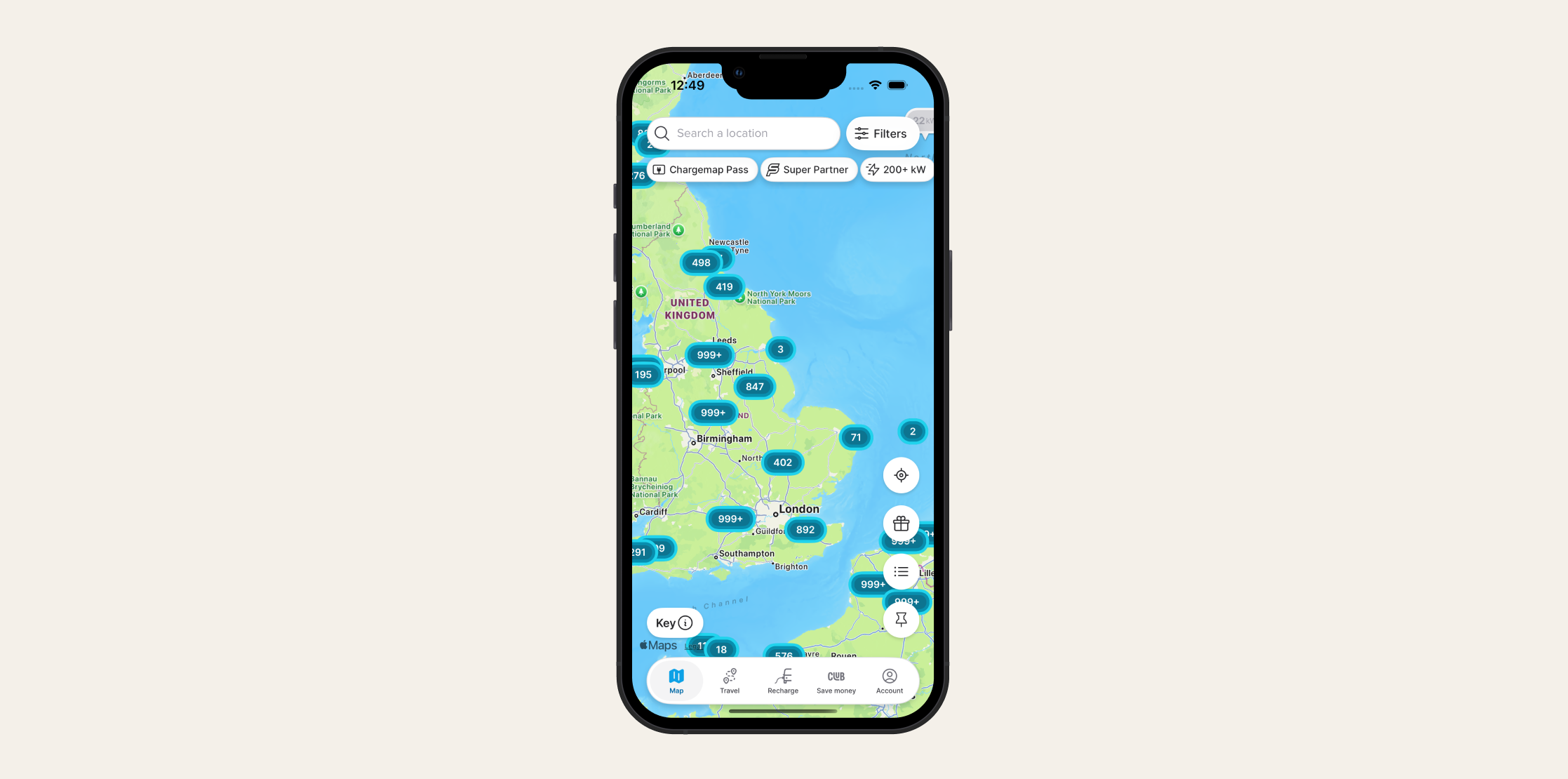
Along the same lines, depending on your particular needs, it might be interesting to select an RFID charging card that enables you to charge your EV abroad. This way, you will already have everything you need if you decide to travel in Europe with your EV.
To give you some idea, the Chargemap Pass RFID charging card is compatible with over {{charging-points}} charging points in 19 European countries, including the UK, spread over more than 2,000 networks across Europe.
3. Can I charge my EV on the most commonly found rapid charging networks?

Beyond mere figures, you should also look at the type of charging networks accessible with your RFID card for EV charging. Today, new EV models are virtually systematically fitted with high-performance battery packs designed for rapid charging. On longer journeys, access to the most efficient rapid charging networks offers a crucial advantage.
Among the best known rapid charging networks, we can mention IONITY, Fastned, or Allego.
4. How will I be billed for charging?

Each RFID card for EV charging has its own invoicing mode: per charge, per month, subscription etc. The best RFID card for EV charging for you is the one that best suits your charging needs. To give you plenty of leeway, the Chargemap Pass does not operate on a subscription basis. You are only billed when you use it. And just one invoice is sent to you at the start of each month so you can settle the charges for the previous month*.
*If your total charging costs reach €150 before the end of the current billing period, an interim invoice will be sent to you.
5. How can I access the charging tariffs related to my RFID card?
First and foremost, you need to understand that the tariff posted at the charging stations does not necessarily correspond to the rate applied for your RFID charging card. Each mobility service provider defines their own charging rates. It is therefore very important to check the tariffs applied when using your RFID card for EV charging before each charging session (rate per kWh and/or per minute, parking costs, specific time brackets etc.).
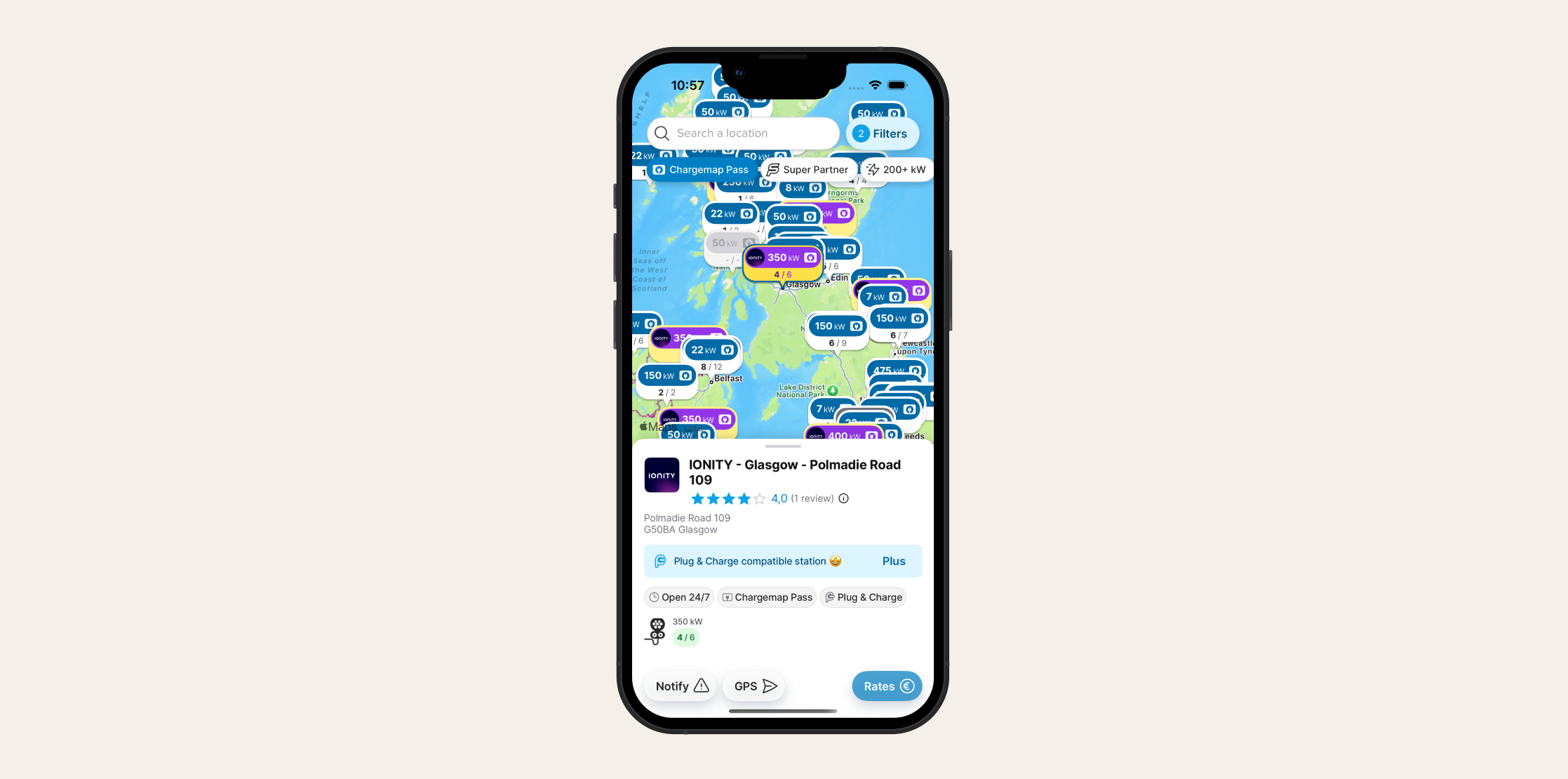
To avoid unpleasant surprises when you receive your bill, make sure you opt for a service that has a clear, transparent tariff policy for charging sessions. On this topic, Chargemap takes great pride in making its pricing system as accessible and clear as possible. Indeed, in the Chargemap app, a simple click on the “See rates” button will give you all the necessary details on the price of your charging sessions using the Chargemap Pass.
6. What about if I have a problem with my RFID charging card?
As we mentioned earlier, access to a dedicated customer service and assistance is essential if you are to enjoy the best possible experience with your RFID card for EV charging.
In addition to a comprehensive Chargemap help centre, the Chargemap Pass opens the gateway to specialised customer assistance on charging EVs. And the icing on the cake - it is open 24/7 by phone or by email.
7. Can I access additional services?
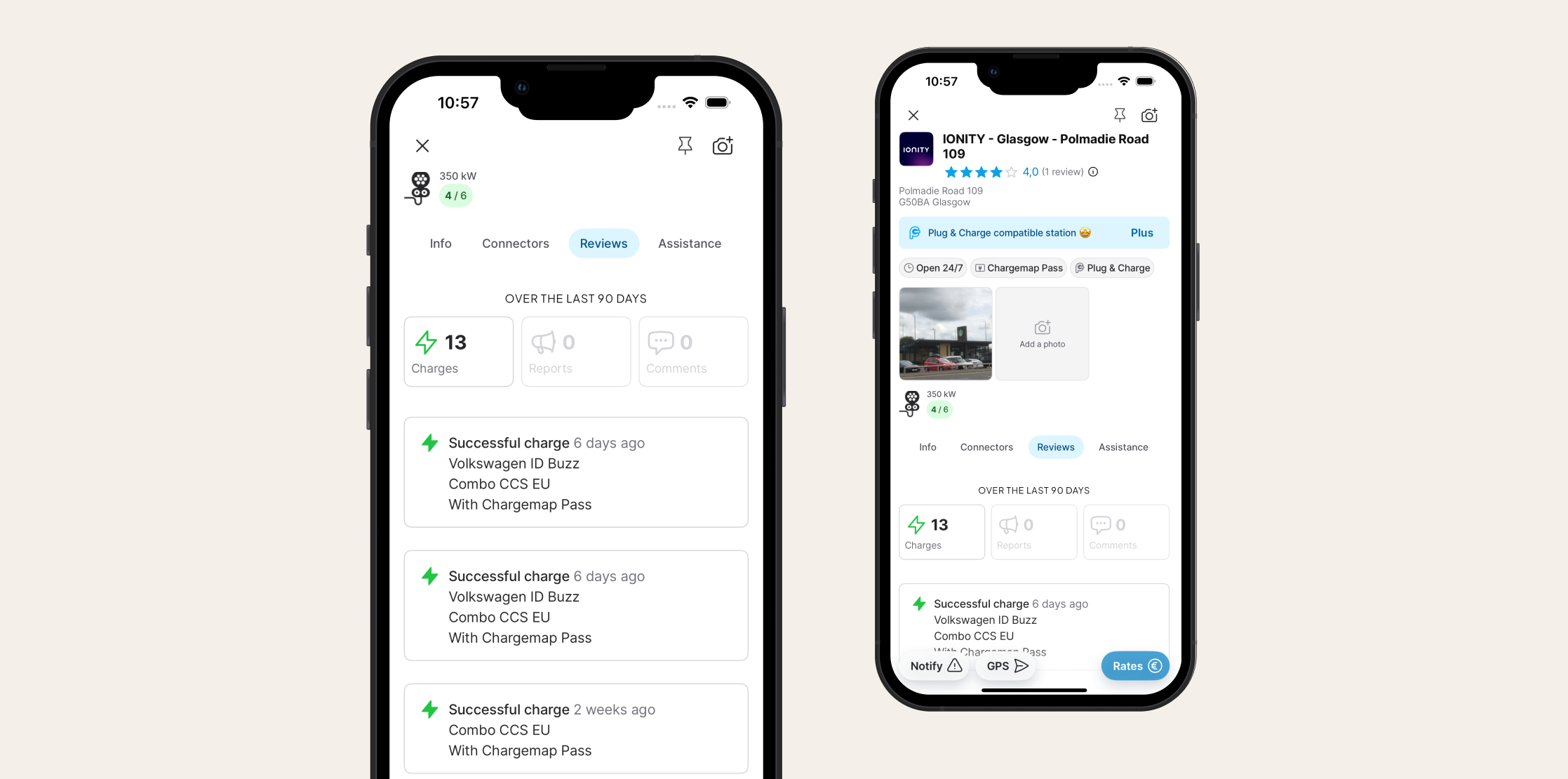
Last, but certainly not least – the features linked with your RFID charging card for EVs. At Chargemap, this added extra is clearly demonstrated by the mobile app. For example, you can:
- View compatible charging stations in a jiffy thanks to the filters,
- Filter charging points according to their rate (rates per kWh only and maximum kWh price),
- Check the availability of the connectors in real time,
- Make sure the charging points are reliable thanks to the reviews and comments posted by the Chargemap community. An extra key indicator: successful charges using the Chargemap Pass are automatically uploaded for each compatible charging station ?
- Manage all your charging sessions on a page dedicated to your Chargemap Pass.
In short: what to bear in mind to pick the best RFID charging card for your EV
- The number, nature and location of accessible charging networks
- Absolute clarity in terms of tariffs and billing
- Extra features to make charging easier

Download the Chargemap app
Find charging stations compatible with the Chargemap Pass, compare prices in a jiffy, and manage all your charging sessions in one place.


We answer your questions
What is an RFID card for EV charging?
An RFID card for EV charging is a card or badge fitted with a wireless chip that identifies your account at a charging station to start and stop your charging session. Thanks to roaming agreements between operators, one card such as the Chargemap Pass can work on multiple networks, including in other European countries.
Read more about: How does an EV charging card work?
What's the best charging card for EV charging?
There's no single right answer: it all depends on your network coverage, your journeys and your budget. A multi-network charging card with wide coverage remains the safest choice to avoid any unpleasant surprises. The Chargemap Pass, for example, gives you access to over {{charging-points}} charging points in 19 European countries including the UK.
Can you charge without a card, using just your smartphone?
Yes, if you have a Chargemap Pass, you can start a charging session directly from the Chargemap mobile app, on over 200,000 compatible charging stations. To find them, open the Chargemap app and use the "Compatible with app charging" filter.
Read more about: Charge your electric car via the Chargemap mobile app