With the release of increasingly powerful electric vehicle models, one of the main selling points is reduced charging time. These new models are equipped with high-performance battery packs designed for fast charging. How can you use fast charging for your electric car optimally? Let's cover the 6 essentials you need to know before plugging into a fast charging point.

Key Takeaways
1. A fast charging point delivers direct current (DC)
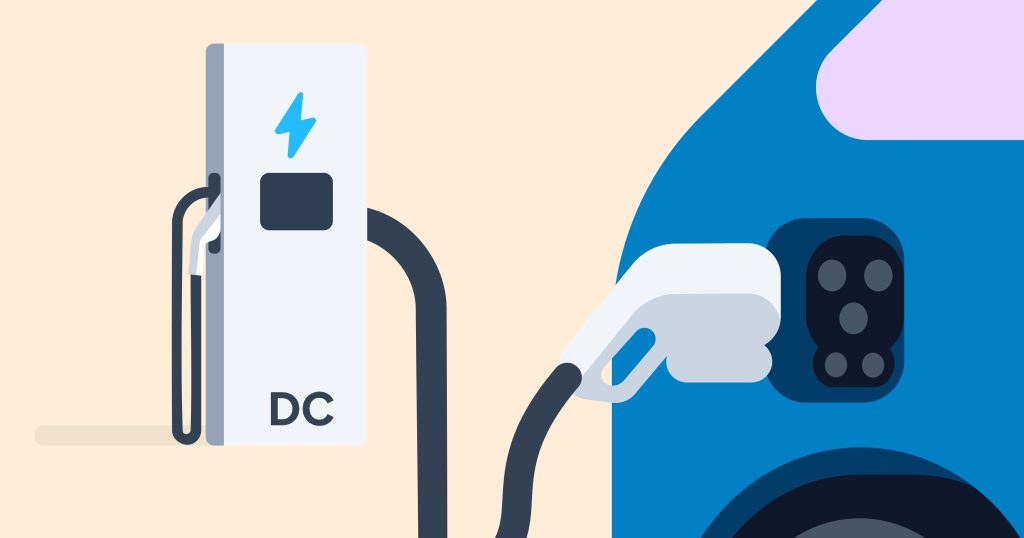
First things first, let's start with solid foundations by addressing the concept of direct current (DC), and therefore alternating current (AC).
What do you need to know?
The electricity grid delivers electricity as alternating current.
Your electric vehicle's battery can only store electricity as direct current.
At slow to accelerated charging points (AC), the conversion from alternating current to direct current is carried out directly via a converter in your electric vehicle. This considerably extends charging time.
A powerful AC/DC converter is fitted to fast charging points (DC), significantly reducing charging time. Direct current is directly injected into your electric car's battery.
N.B.: The converters within fast charging points themselves can be put under strain due to external constraints. To counter this, the converters in Tesla Superchargers, for example, are not directly installed in the charging point but in nearby buildings, which makes their operation safer and more efficient.
2. A charging cable is systematically attached to fast charging stations
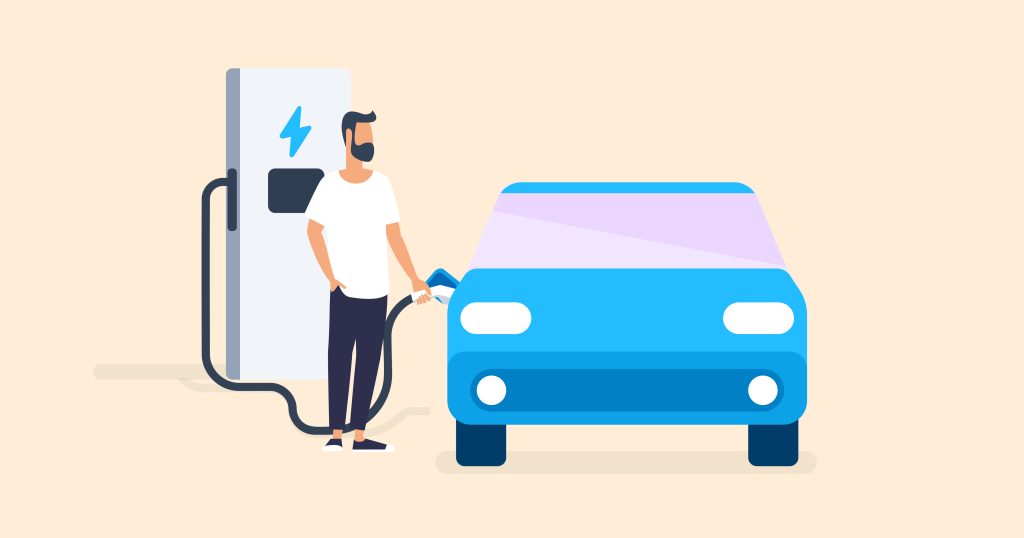
Unlike slow and accelerated charging points, there's no need to bring your own charging cable to plug into a fast charging station. A cable is always attached to the charging point. It's therefore all the more important to take care of the charging point's equipment and ensure you carefully replace the cable once charging is complete.
Combo CCS

- European fast charging standard
- Charging points equipped with Combo CCS offer charging power above 50 kW.
CHAdeMO

- Increasingly rare, connector mainly found on Japanese electric cars
- Fast charging points with CHAdeMO connector generally deliver up to 50 kW.
Type 2 (female)

European standard for alternating current charging
A Type 2 cable is attached when the charging point delivers power above 22 kW, therefore considered fast charging, generally 43 kW.
N.B.: only 2 older Renault Zoé models - Q210 (2013-2016) and Q90 (2016-2020) - are capable of reaching 43 kW in alternating current. At a 43 kW AC charging point, other models are therefore limited to the maximum power tolerated by their onboard T2 AC charger. This is why new AC charging points deployed no longer exceed 22 kW.
To go further, we invite you to read our article on the different socket types for charging an electric car.
3. An ultra-fast charging point doesn't "necessarily" charge your electric car faster

When discovering the world of charging, it's natural to think that the more power the charging point delivers (kW), the shorter the charging time. However, this isn't always the case and it's necessary to zoom in on a few characteristics.
To start with, what's the maximum power tolerated by your electric car's internal charger in direct current? Indeed, charging at a 350 kW ultra-fast charging point when your vehicle only tolerates 100 kW will only limit the power delivered by the charging point and received by the vehicle. It's therefore a waste of money since you're paying for a service your electric car can't fully benefit from.
Other factors can reduce the power delivered by a fast charging point to your electric car:
- battery temperature,
- weather conditions, particularly if you're charging your electric vehicle during very cold or very hot weather,
- battery level and condition.
To find out more about these different factors, we invite you to read our dedicated article on power and charging time to avoid unpleasant surprises.
4. Fast charging points are predominantly found on motorways
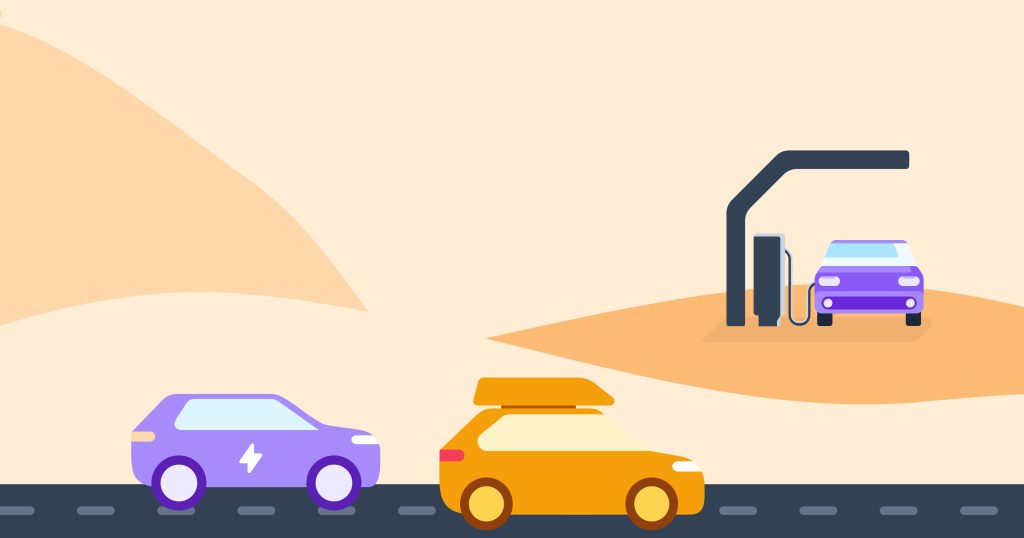
Most major motorways are now equipped with fast charging points for electric cars. They're ideal for long journeys and allow you to recover energy in minimal time (subject to your electric car's maximum charging capacity).
Reassuring news for EV drivers who will no longer struggle to charge on motorways.
5. A pre-conditioned battery achieves better fast charging performance

Let's start by defining the terms. What does "pre-conditioning a battery" mean? This means the battery is pre-heated or pre-cooled to reach its ideal temperature and therefore its maximum charging capabilities. In line with the previous point, this feature is therefore particularly useful during periods of severe cold or heatwave.
But what's the ideal time to activate battery pre-conditioning? It depends on your vehicle. If we take Tesla vehicles, the benchmark for this feature, battery pre-conditioning is automatic and not manual. As soon as you plan a charging stop via the dashboard, pre-conditioning automatically activates to reach the right temperature before the charging point. If your vehicle only offers manual pre-conditioning activation, experience suggests that 30 minutes before charging is sufficient.
6. Using fast charging too frequently accelerates your battery degradation

What's the point of having an electric car with high fast charging capabilities if you don't make the most of them?
Well yes, but no. The problem with using fast charging too frequently on your electric car is premature battery wear. Fast charging raises the battery pack to very high temperatures. This overheating state causes degradation of the cells within the battery.
To preserve your battery over time, alternate between slow/accelerated charging and fast charging. A realistic use would be to charge daily at a slow charging point at home or at work and resort to fast charging points during long journeys with your electric car.
Moreover, the fast charging service generally costs significantly more, particularly due to the location and installation cost of fast charging points. To lighten your charging budget, you therefore have every reason not to use fast charging daily.
To find out more, read our article on the 6 mistakes to avoid to preserve your electric car's battery.
Bonus: Where and how to find fast charging points?
As seen previously, fast charging points are found at motorway service areas, but not only there, fortunately! Here are the main places where you can find fast charging points:
Public fast charging networks
Many public networks now offer fast charging points, particularly on major roads and in urban areas. Amongst the main networks available in Europe, we find:
- IONITY: known for its high-power charging points (up to 350 kW).
- Powerdot: with its fast charging points in supermarket and shopping centre car parks.
- Fastned: a rapidly developing network, offering stations with fast charging points accessible 24/7 at strategic locations.
Shopping centres and public car parks
More and more shopping centres, supermarkets, and public car parks are installing fast charging points to attract customers. These charging points are practical for charging your car whilst shopping or on trips.
Locating fast charging points with ease
To simplify the search for fast charging points, the Chargemap app is your best option for easily locating available infrastructure around you.
Thanks to filters, it allows you to spot charging points at a glance based on their charging power and/or their connectors.
Only looking for fast charging points on motorways? Simply activate the "Motorway service areas only" filter and you're done!
Chargemap app filter for motorway fast charging points
What about you? Do you use fast charging for your electric car frequently? Don't hesitate to share your experience in the comments!

Download the Chargemap app
To find fast charging points near you in Portugal and across Europe, download the Chargemap app.