The arrival of winter often raises several questions for electric car drivers: reduced range, slower charging, higher energy consumption from heating… While cold weather can indeed affect certain aspects of use, rest assured that these effects are temporary and limited. We take a look at the real impact of cold weather on electric cars, free from misconceptions, and share our tips to preserve range, optimise charging, and drive with peace of mind throughout the winter.

Key Takeaways
- Cold weather can reduce range and lengthen charging times
- These effects are temporary and vary depending on driving habits and type of vehicle
- Preheating, suitable tyres, and gentle driving make a difference
- Good planning allows you to drive with peace of mind all winter
What are the real effects of cold weather on electric vehicles?

Cold weather doesn’t prevent you from driving an electric car, but it can affect certain aspects of how it works.
Reduced range, especially on short journeys
You may have noticed it on your smartphone: the battery tends to drain faster when you spend the day outside in the middle of winter. The same goes for the range of an electric car in cold weather.
Electric car batteries are mainly made up of lithium-ion cells, which are sensitive to temperature variations. When the thermometer drops, several internal processes are affected, which can lead to a slight decrease in range.
This explanation is purely chemical. Simply put, the colder it gets, the slower the chemical reactions inside the battery, which reduces voltage and efficiency, causing the battery to discharge faster.
This effect is particularly noticeable:
- on short journeys
- when the vehicle hasn’t had time to warm up
- if the vehicle hasn’t been preheated
💡 To learn more about the factors affecting range and charging, check out our complete charging guide.
Charging might be slower
During periods of extreme cold, to protect the battery, your electric vehicle may adjust the charging power if the battery is too cold.
This doesn’t affect charging itself:
- it works normally,
- but may be slower at first,
- power gradually increases as the battery warms up.
Recent electric vehicles are equipped with thermal management systems that significantly reduce this effect.
Do charging stations work in winter?
Yes, rest assured: almost all charging stations are designed to operate in cold weather, including at temperatures as low as -35°C! You might notice a slight drop in power or a slightly slower start on some charging points. These cases are rare and don’t affect the overall performance of the charging infrastructure.
🏠 If you are considering installing a charging station at home, it is recommended to take local weather conditions into account (exposure to cold, humidity, or snow) to choose equipment that is suitable and durable.
Heating and energy consumption: what impact in winter?

In winter, heating naturally becomes the main source of comfort on board. In an electric car, it is also the primary source of increased energy use, although its impact is often less significant than many people imagine.
Heat pump or electric resistance?
There are two main types of heating systems in electric cars: Electric resistance heating, found in some models, consumes between 2 and 4kW on average. Heat pumps, increasingly common in newer vehicles, are much more efficient, typically using between 0.5 and 1kW.
An electric resistance heater therefore consumes around 2 to 6 times more energy than a heat pump.
The good news is that heat pumps are becoming more widespread in new electric car models. However, make sure to check this feature before buying an electric vehicle, especially if it’s an older model.
Do other systems use a lot of energy?

For other systems (radio, windscreen wipers, and lights), energy consumption is very minimal. For reference, headlights typically use around 120 watts, while windscreen wipers and the radio use less than 100 watts. This has very little impact overall, so you can use these systems in cold weather without any concern.
Winter tyres and electric cars: the essentials
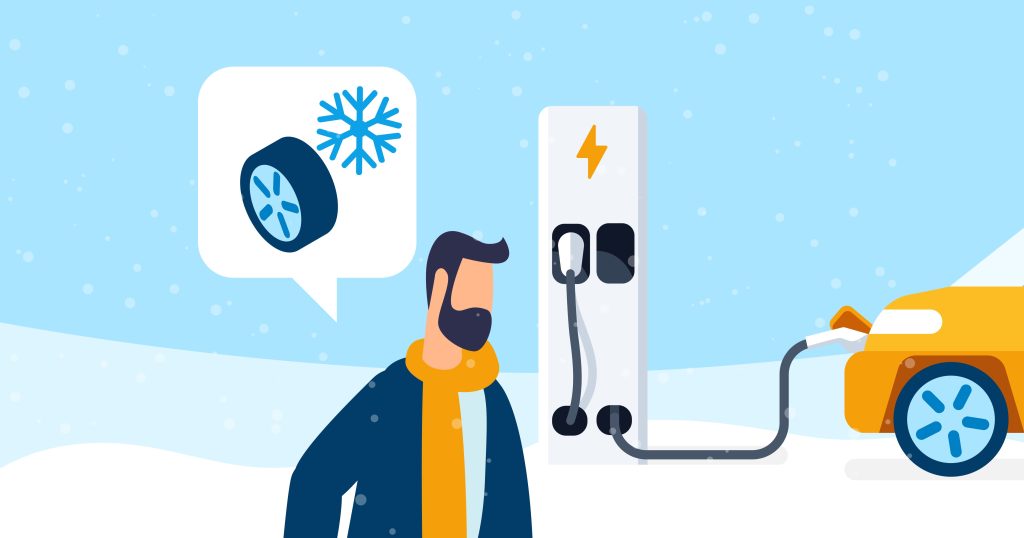
As with internal combustion engine (ICE) vehicles, winter or all-season tyres are recommended whenever temperatures drop below 7 °C, and may be mandatory in certain regions. They improve safety, grip, and driving efficiency. Electric cars, however, have specific characteristics (weight, immediate torque, and quiet operation) that can influence the choice of tyres.
How to minimise the impact of cold weather on your electric vehicle
Parking in a closed garage
It’s best to park your car in a warm place to preserve the battery as much as possible. For the battery to function correctly, it needs to be maintained at a certain temperature. If possible, avoid leaving your vehicle outside overnight. If you don’t have a garage, you could consider using a protective cover to provide basic protection against cold winter temperatures.
Preheat the interior of the vehicle
If your vehicle has an electric resistance heater or you are about to embark on a long journey, it’s ideal to switch on the heating before setting off. It’s best to set the heating about 30 minutes before departure while the vehicle is still plugged in. This way, it draws power from the mains rather than the battery. You can start your journey in the best conditions while reducing energy consumption from the heater, which is then only used to maintain the cabin temperature.
Use heated seats and heated steering wheel
Heated seats and a heated steering wheel use less energy than the main heater. Combined with the previous tip, using these features is enough to stay warm on short to medium journeys.
Ease off the accelerator
Finally, to complete the trio of tips, we recommend driving more gently. In eco mode, you can extend your range even further while staying warm in your electric vehicle by using regenerative braking intelligently.
Bonus tip: adjust your speed settings in the Chargemap app
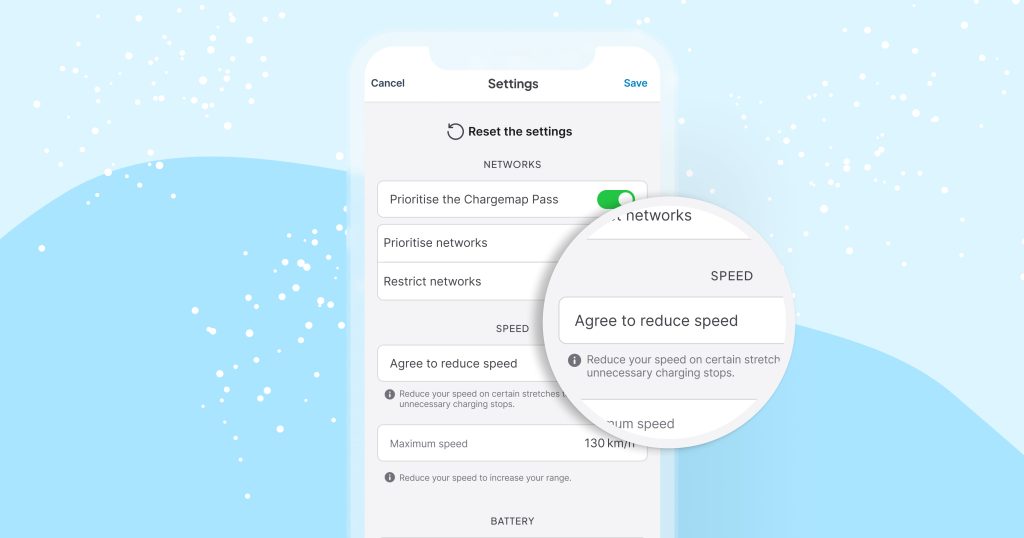
In winter, good planning allows you to anticipate charging more calmly and avoid unpleasant surprises caused by slightly higher energy consumption. The Chargemap route planner allows you to set a maximum speed to save energy. Similarly, you can enable the “Agree to reduce speed” option. Where possible on your journey, the Chargemap route planner can suggest driving at a lower speed on certain sections to avoid an extra charging stop.
➡️ For long journeys, also see our tips for preparing a long trip in an electric car.
In your electric vehicle, Chargemap is your best ally for planning trips with peace of mind.
Conclusion: driving an electric car in winter with peace of mind
While cold weather can affect certain aspects of use, electric cars remain perfectly suited for winter driving. The effects on range and charging are now well understood, temporary, and largely managed by modern vehicles.
We hope this article helps you stay comfortable and confident in your electric vehicle in cold weather conditions. Feel free to share your experiences in the comments. Do you have any other tips for new EV drivers? ❄️

In your electric car, Chargemap is your best ally for planning your journeys with peace of mind.
Download the Chargemap app for free.


We answer your questions
Can an electric car be left outside in winter?
Yes, it is designed to withstand sub-zero temperatures. Parking in a sheltered spot is preferable when possible, but leaving your vehicle outside in winter will not damage the battery. The effects of cold weather on range are limited.
Should I use winter tyres on my electric car?
Yes, it is recommended to equip your vehicle with winter tyres to ensure better grip and safety on cold or snowy roads.
How to preserve your electric car’s range in winter?
Preheat the interior while charging, use heated seats instead of the main heater, and regularly check tyre pressure.